
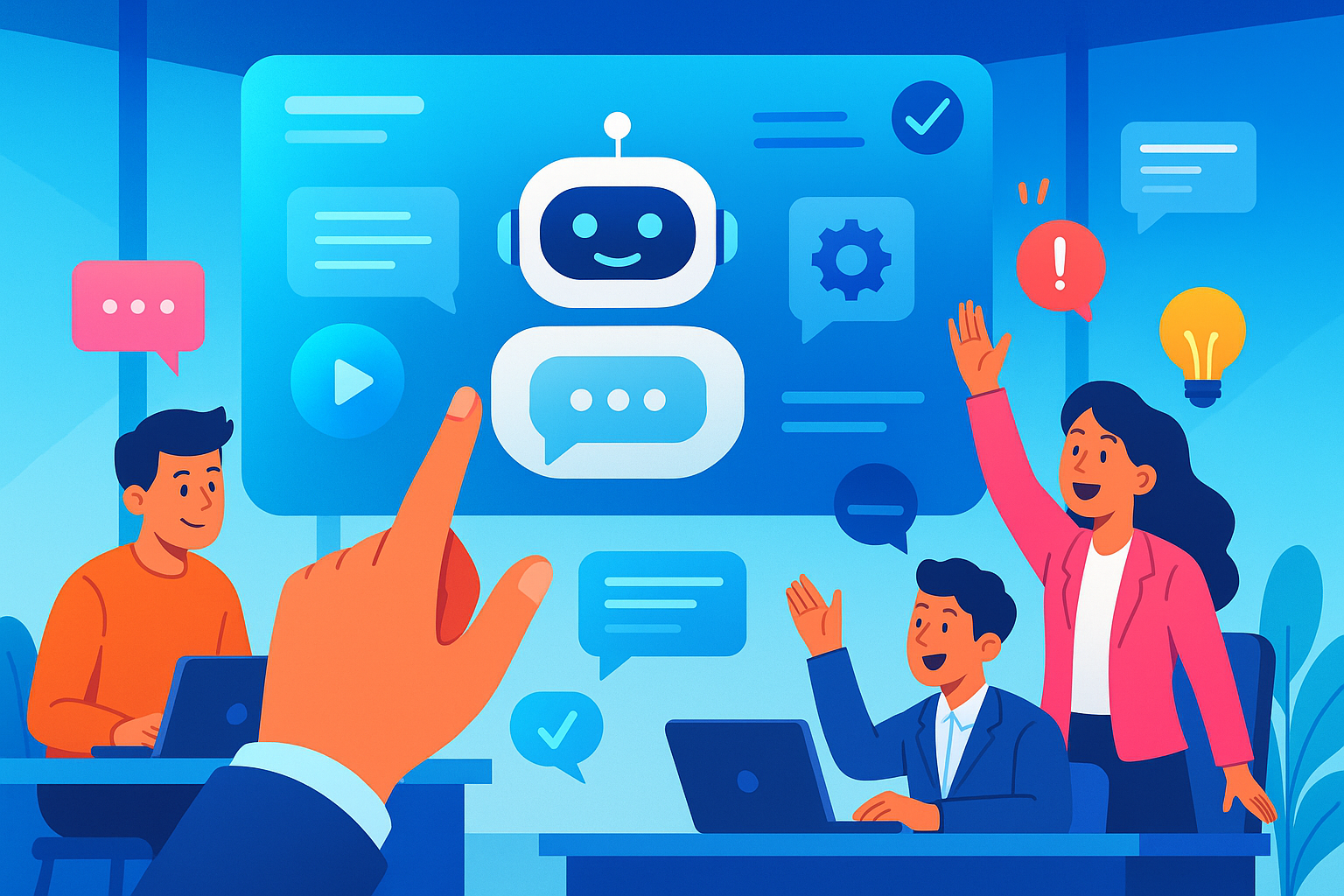
Building a startup is a relentless journey. You’re juggling product development, customer acquisition, investor meetings, and team scaling — all while trying to maintain exceptional customer relationships. But what if you could automate the entire customer engagement process without losing the personal touch? That’s where AI Voice Automation comes into play. I’ve personally walked this path at ezdial.ai, and in this guide, I’ll share how you can leverage automation to accelerate your startup’s growth through automated customer follow-ups and intelligent voice interactions.
1. Identify the Time Drains in Your Startup
The first step toward automation is awareness. As an entrepreneur, your time is your most valuable asset. Are you spending hours every week manually responding to customers, following up on leads, or training new sales reps to say the same lines repeatedly? List these repetitive activities. When I did this exercise, I discovered our team spent over 30% of their week just on outbound calls and basic follow-ups—something that ezdial.ai now handles with voice automation in minutes.
2. Define Your Ideal Customer Interactions
Not every conversation can—or should—be automated. Start by defining what an ideal customer interaction looks like. What tone should your brand convey? How should your AI handle objections or confusion? Using natural, conversational AI, ezdial.ai allows you to design call flows that sound authentically human while keeping your brand personality intact. The goal is to build trust and reliability through consistent communication, automatically.
3. Choose the Right AI Voice Automation Platform
Selecting the right platform can make or break your automation strategy. Look for features that integrate seamlessly with your CRM, allow real-time data updates, and support multi-language conversations. At this stage, I chose ezdial.ai because of its scalability and ability to handle automated customer follow-ups intelligently based on past interactions. Imagine your AI remembering a customer’s last issue and proactively checking in to ensure satisfaction—that’s the power of smart automation.
4. Map Out Your Automation Workflow
Before diving in, visualize how your automated conversations will flow. Start from the moment a lead enters your pipeline: How soon should the AI call them? What happens if they don’t answer? How should the AI route calls requiring a human touchpoint? Creating this call architecture helps maintain control over your brand’s voice and ensures a seamless customer experience. Pro tip: start simple with one or two automated workflows, then expand as you gain confidence.
5. Train Your AI to Sound Human
AI voice automation is only as effective as the quality of its training. One of the lessons I learned early was that tone and empathy matter—immensely. Using advanced natural language processing, ezdial.ai allows startups to train their AI to handle real-world variability in speech, accents, and intent. Add pauses, acknowledgments, and context-driven responses to make your AI sound like a friendly team member, not a robotic script reader.
6. Test, Optimize, and Scale
Once your workflows are live, continuous optimization is key. Monitor conversion rates, response times, and engagement metrics. When I first launched voice outreach through ezdial.ai, I discovered minor tweaks—like adjusting follow-up timing from 24 hours to 6 hours—dramatically improved customer response rates. Treat automation as a living system that evolves with your customers. As your startup scales, the system should grow with you, handling thousands of calls simultaneously while preserving the human experience.
7. Use Automated Customer Follow-Ups to Build Loyalty
Customer retention is where voice automation shines. By implementing automated customer follow-ups, you can re-engage past leads, request feedback, or remind customers of upcoming renewals—all without human intervention. These small touches demonstrate care and consistency, fostering loyalty while keeping your human team free for higher-value interactions like relationship-building and strategic decision-making.
8. Measure Success with Real Data
Automation should drive measurable outcomes. Track KPIs like conversion rate improvements, average response time, and customer satisfaction scores. With ezdial.ai, you can integrate dashboards that visualize performance in real-time, enabling data-backed decisions. You’ll quickly see how AI voice automation impacts revenue and customer engagement, validating the investment and empowering continuous improvement.
9. Future-Proof Your Startup’s Communication Strategy
As digital interactions evolve, voice automation will dominate customer engagement strategies. Integrating AI voice assistants today positions your startup ahead of the curve for tomorrow. The businesses that thrive will be those that personalize at scale, leveraging technology to create meaningful human-like connections. With tools like ezdial.ai, you’re not just automating calls—you’re redefining customer experience for the next generation.
Conclusion: Automating with voice AI isn’t about replacing humans—it’s about amplifying your capacity to connect, serve, and grow. The shift from manual touchpoints to intelligent automation frees you to focus on vision, not routine. As I’ve experienced firsthand, once your AI takes over the repetitive tasks, your startup can expand faster, deliver more value, and operate with unstoppable efficiency.
Start Using ezDial Today: https://ezdial.ai/prices/