
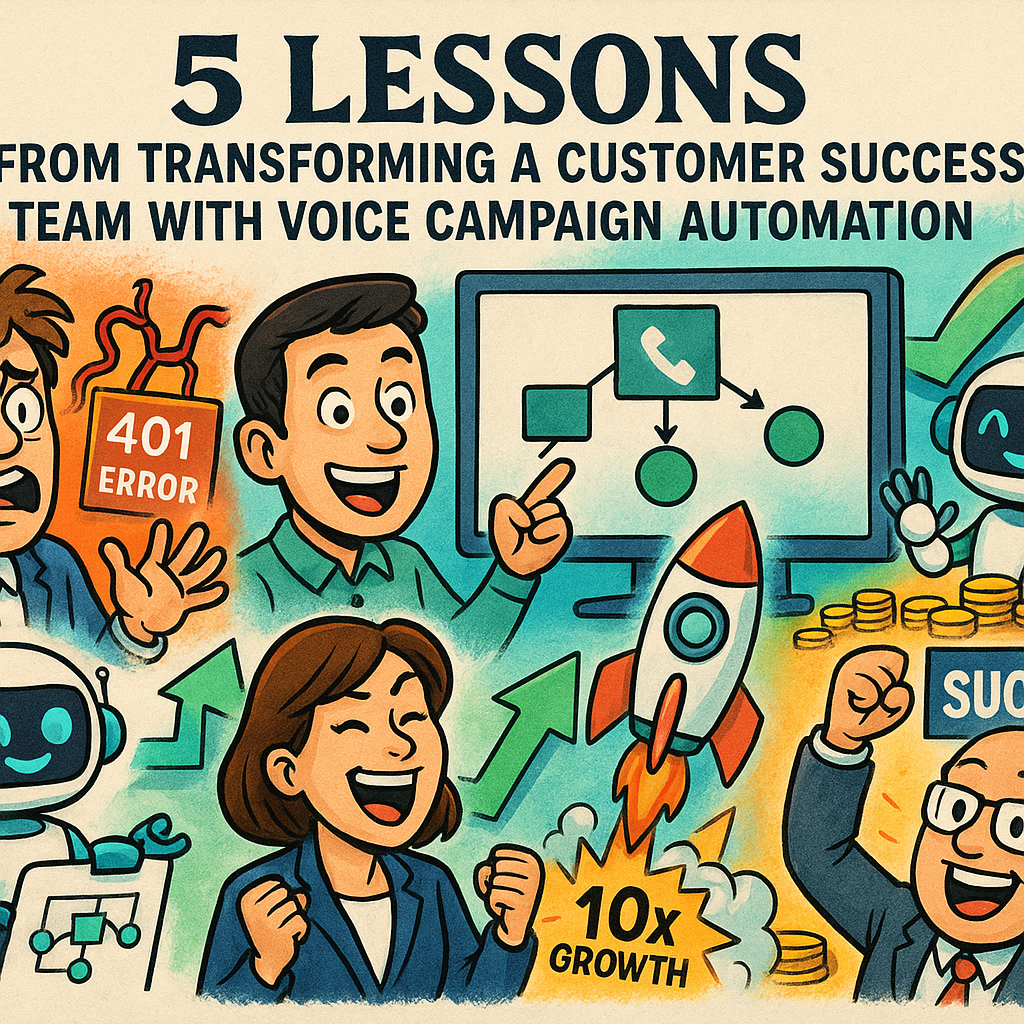
In the fast-paced world of digital customer experience, agility and automation make all the difference. Our customer success team at ezdial.ai recently underwent a major transformation when we integrated voice campaign automation into our workflow. What started as a simple experiment quickly evolved into a best-practice model for scaling customer communication. In this article, I’ll walk you through five real-life lessons we learned while implementing voice automation — insights that could help your team enhance engagement, efficiency, and overall satisfaction.
1. Identify the Right Campaigns for Automation
Our biggest early mistake was trying to automate everything. We soon learned that not every customer interaction benefits from voice automation. Instead, we prioritized recurring, high-volume campaigns such as appointment reminders, renewal updates, and feedback collection. These routine processes consumed most of our team’s time but required low personalization. Once we automated them using ezdial.ai’s intelligent voice workflow, our agents regained time for complex, high-value conversations with customers.
2. Customize the Tone and Flow for Each Segment
Generic automation rarely resonates with customers. Voice automation works best when it feels genuinely human. We tailored each campaign’s tone, message flow, and voice persona to align with our brand voice and the needs of each segment. For enterprise clients, we used a professional tone; for small businesses, a more conversational approach. This simple adjustment increased response rates by nearly 40%. Personalization within automation became one of our strongest assets.
3. Use Data Insights to Continuously Refine Messaging
One of the hidden advantages of voice campaign automation is access to detailed analytics. By monitoring call engagement, drop-offs, and sentiment analysis, we identified weak points in our communication flow. For example, a campaign initially abandoned by many callers was restructured after we discovered that the voice prompt length was too long. Once shortened, completion rates improved dramatically. Constant iteration, fed by real-time data, turned average campaigns into consistently high performers.
4. Align Automation Goals with Customer Success Metrics
Automation should serve your core KPIs — not become an isolated project. Our team defined clear success metrics before launching each campaign: customer satisfaction, retention rate, and response time. We synced ezdial.ai’s dashboard with our CRM to track outcomes automatically. This integration allowed us to attribute performance changes directly to specific automated interactions. As a result, we could show tangible ROI and make a data-backed case for further investment in automation.
5. Secure Team Buy-in Early
No technology can succeed without people’s support. Initially, some of our customer success agents feared automation might replace personal touch. We tackled this by involving them early in the design process and emphasizing how automation complements — not replaces — human expertise. As they witnessed improved efficiency and happier customers, skepticism turned into enthusiasm. The shift in mindset was just as vital as the technical implementation itself.
Conclusion: Blending Human Empathy with Automation Efficiency
The journey toward smarter communication taught us that automation doesn’t diminish human connection — it strengthens it when applied thoughtfully. By strategically deploying voice campaign automation, we created more meaningful customer experiences while empowering our team to focus on what they do best: solving problems and building relationships. If your customer success team is ready to elevate its digital engagement strategy, it’s time to bring automation into the mix.
Start Using ezDial Today: https://ezdial.ai/prices/