
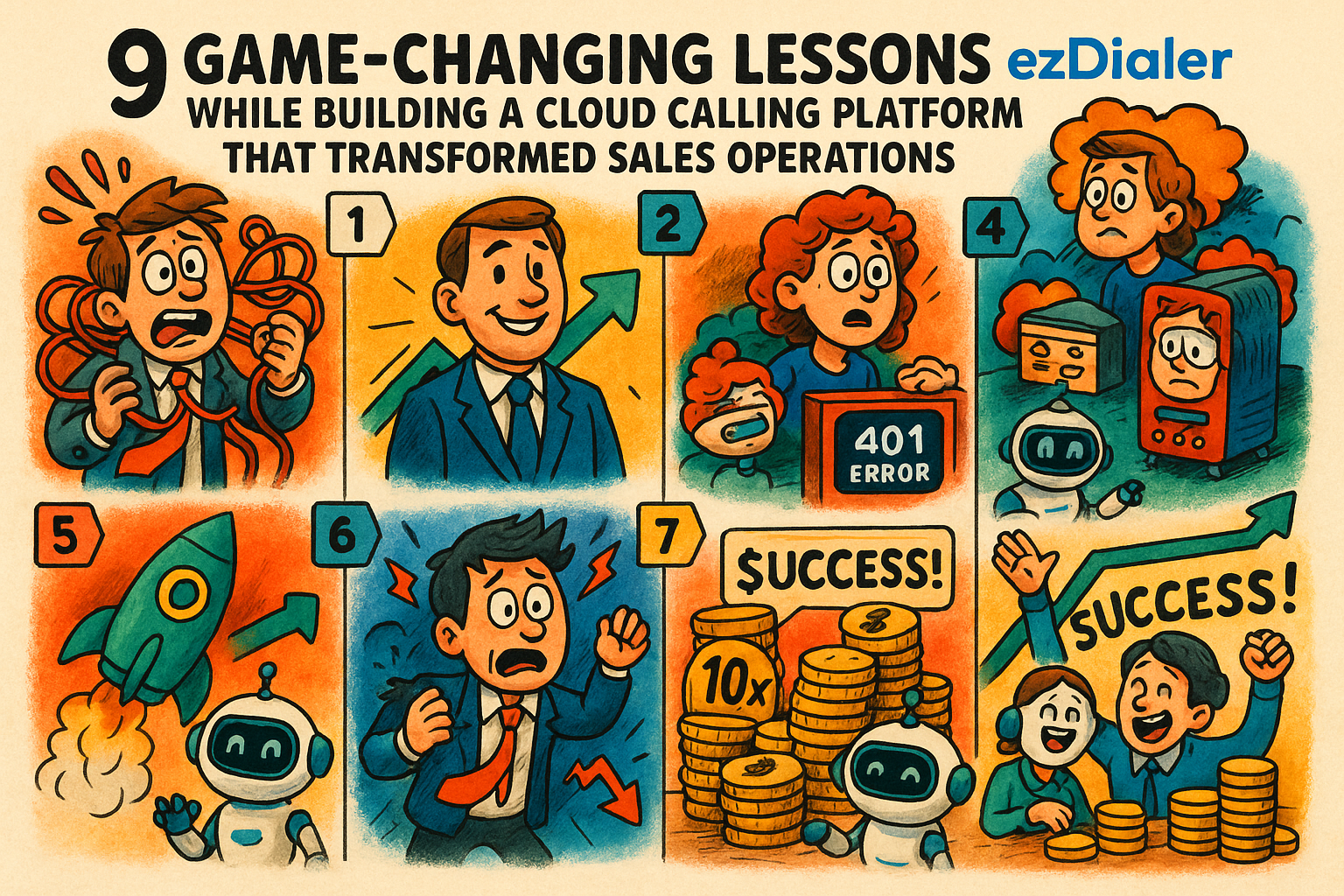
When we first started building ezDial.ai, our mission was simple: empower sales teams to do what they do best—build relationships and close deals—without being bogged down by outdated calling systems. As a small team of digital professionals, we knew the telecom space was ripe for transformation. What we didn’t know was how deeply a well-built cloud calling platform could reshape the way sales managers make decisions daily. This is the story of how we turned chaos into clarity, one call at a time—and the nine lessons we learned along the way.
1. Understanding the Problem Was the First Real Win
We began with an observation: sales teams were spending more time managing calls than making them. Managers juggled spreadsheets, manual logs, and disjointed communication tools. We immersed ourselves in the trenches with sales managers to understand their pain points. The discovery phase revealed that inefficiency wasn’t caused by lack of skill—it was caused by scattered systems. Once we saw this clearly, we knew we needed to simplify. The simple act of understanding the root cause set the foundation for everything that followed.
2. Simplicity Is the Most Advanced Feature
In our first product sprint, the temptation to over-engineer was real. A dashboard here, a graph there—it was intoxicating. But real-world testing showed us that managers valued clarity over complexity. We stripped away unnecessary noise, leaving behind a clean, intuitive interface where sales directors could see performance data at a glance. That simplicity didn’t mean fewer features; it meant smarter prioritization. Every button had to earn its place. That’s when usability became our north star.
3. Data Visibility Drives Better Decision-Making
Sales managers live and breathe data. But if that data is buried in hard drives or requires endless exports, it’s as good as invisible. Our cloud calling platform made call logs and analytics accessible in real time. The shift was immediate—managers could suddenly see which team members were performing well, what calling times yielded the best results, and where to redirect energy. Visibility wasn’t just about numbers; it was about empowering confident, intelligent decisions. We quickly realized that when sales leaders have insights at their fingertips, accountability naturally follows.
4. Empowering Remote Teams Redefined Productivity
In the digital-first world, remote work isn’t a perk—it’s the default. Early on, we noticed that distributed teams struggled with call consistency and supervision. Our pivot toward a fully cloud-based solution wasn’t only technical—it was cultural. We adopted flexible infrastructure that allowed call monitoring, live coaching, and team reporting from anywhere. Managers suddenly had the freedom to manage performance remotely. Sales reps, on the other hand, felt trusted and supported. That trust became a multiplier for productivity, not a limiter.
5. Automation Isn’t About Replacing People—It’s About Empowering Them
Automation often gets a bad rap in sales circles, mostly because it’s seen as impersonal. We flipped that narrative. Instead of automating relationships, we automated the repetitive, time-sucking tasks around them—like dialing sequences, missed-call follow-ups, and report generation. This helped teams reclaim hours every week. One sales manager told us her team was able to increase outbound call volume by 30% simply because automation freed up their focus. That was the moment we knew the technology was doing what it was meant to do: enable people to sell, not struggle.
6. Integrations Turn Tools into Ecosystems
As our early adopters grew with us, the question shifted from “What can ezDial do?” to “What can ezDial connect with?” Sales teams didn’t want to abandon their CRM or chat apps—they wanted everything to work together. So we prioritized integrations. Today, our cloud calling platform seamlessly connects with CRMs, ticketing platforms, and team messengers, making data flow naturally between departments. Managers don’t have to manually sync data or chase down reports. That integration-first approach positioned ezDial.ai not as a standalone product, but as part of an ecosystem of productivity.
7. Scalability Comes from Listening, Not Guessing
Growth didn’t come because we predicted the market perfectly; it came because we listened carefully to our users. Every feature we scaled—from bulk calling to reporting dashboards—was born from a real use case. One of our earliest customers, a fast-growing service provider, needed to handle a sudden surge in inbound calls during promotions. Their need for instant scalability inspired innovations in our cloud architecture. By building elasticity into the system, we learned that growth is most sustainable when it serves genuine customer demands, not assumptions.
8. Human-Centric Support Builds Loyalty, Not Just Users
Technology alone doesn’t win hearts—people do. As we gained traction, we made customer support a strategic function, not an afterthought. Every ticket was an opportunity to learn; every call was a chance to improve. When one manager came to us frustrated about a configuration glitch, our quick and transparent response turned a potential churn into a long-term relationship. We found that in the digital industry, trust is the ultimate differentiator. Support isn’t a cost center; it’s a growth engine.
9. Decision-Making Today Is About Agility
Sales managers don’t just need data—they need agility. The quicker they can interpret and act on information, the faster they can adjust strategies. The most rewarding feedback we received was from a senior sales leader who said, “ezDial doesn’t just show me what’s happening; it shows me what to do next.” That’s exactly the future we wanted to build—a world where agility isn’t just reactive but predictive. Our analytics now highlight conversation patterns and forecast opportunities. That evolution is ongoing, but the results speak for themselves: better sales performance, smarter priorities, and teams that adapt faster than ever.
Final Thoughts: Building for the Humans Behind the Tech
Looking back, building a cloud calling platform wasn’t simply a technical journey—it was an exercise in empathy. We learned that sales managers don’t need another dashboard; they need confidence. They don’t need more calls; they need meaningful connections. Every line of code, every integration, every late-night bug fix was a step toward making their days smoother and more strategic.
At ezDial.ai, our goal is to keep learning, evolving, and sharing these lessons with the wider sales and telecom community. Because when technology aligns with human needs, growth follows naturally—and so does success.
Start Using ezDial Today: https://ezdial.ai/prices/