

Imagine a call center where every customer interaction feels personal, seamless, and efficient. A place where agents no longer juggle incessant ringing, repetitive queries, or manual data entry—because smart systems do it all. That’s not a futuristic dream; it’s what AI voice automation is bringing to life today. As someone deeply curious about the intersection of human communication and artificial intelligence, I recently dove into how ezdial.ai is reshaping the digital telemarketing industry through ai-driven telemarketing solutions. What I’ve discovered is nothing short of transformative for call center operations.
The Call Center Dilemma: Where Efficiency Meets Empathy
For decades, call centers have been the backbone of customer engagement. Yet, they’ve also been burdened by the same challenges: high turnover rates, inconsistent customer experiences, and the logistical nightmare of managing thousands of conversations simultaneously. Operators walk a tightrope between productivity and empathy, often at the expense of one or the other.
Traditional systems could handle bandwidth but not nuance. A customer’s question about a billing issue, for instance, might bounce between agents, causing frustration on both sides. Here’s where AI voice automation steps in, bridging the gap by handling routine tasks while allowing human agents to focus on what they do best—building relationships.
Understanding AI Voice Automation: More Than Just Talking Robots
At its core, AI voice automation isn’t about replacing humans; it’s about augmenting them. ezdial.ai, in particular, offers a platform where automated voice systems can understand natural language, detect sentiment, and respond appropriately—all powered by deep learning models. Think of these as digital assistants that can handle customer verification, gather feedback, and even initiate follow-ups, all while maintaining a conversational tone.
The beauty of ai-driven telemarketing lies in its adaptability. Unlike rigid scripts, these intelligent systems learn from each interaction. They recognize when a question needs escalation, when to pause for clarification, and even when a human touch is required. The longer they operate, the more intuitive they become. For a call center operator starting out, understanding this dynamic learning process is key to leveraging AI effectively.
How ezdial.ai’s AI-Driven Platform Works
ezdial.ai has built its reputation by blending analytics, linguistics, and automation in a single, easy-to-deploy package. But how exactly does it function behind the scenes? Here’s a simplified overview:
When a call comes in, the AI system parses the spoken language using Natural Language Processing (NLP). It matches intent to potential solutions, drawing on databases of customer information and previous interactions. This allows for immediate, context-aware responses—even before a live agent steps in. In outbound scenarios, such as ai-driven telemarketing campaigns, the system prequalifies leads and adjusts the script dynamically based on detected interest and tone.
For supervisors and operators, the real charm lies in the control dashboard. Real-time analytics reveal performance metrics such as call sentiment, resolution time, and engagement rates. Instead of manually reviewing call logs, operators can prioritize high-impact calls and use data insights to refine campaigns. It’s operational efficiency amplified through intelligence.
The Beginner’s Mindset: Why Curiosity Matters
As someone venturing into AI technology from the perspective of a call center professional, curiosity is your greatest tool. Instead of seeing automation as a black box or a threat, approach it as a learning opportunity. The algorithms powering systems like ezdial.ai are designed to evolve, but they still rely heavily on human input. The more feedback and context you provide, the smarter the system becomes.
Start by exploring small automations—perhaps letting AI handle after-call surveys or basic ticket categorization. Once you witness the efficiency gains firsthand, expand gradually into outbound calls or proactive customer retention campaigns. Curiosity will lead you to discover value where you least expect it: in reducing agent burnout, increasing answer rates, and improving satisfaction scores.
Analyzing Impact: The Numbers Behind the Narrative
AI voice automation is not just a trend; it’s a measurable revolution. According to recent industry data, centers adopting advanced automation experience up to a 40% reduction in average handling time and as much as a 60% improvement in first-call resolution rates. But numbers tell only part of the story. The qualitative benefits are just as significant.
Customers report feeling more heard and understood, largely because intelligent automation ensures their requests reach the right agent or team instantly. Meanwhile, agents experience less cognitive fatigue, focusing their energy on complex issues that require emotional intelligence. As one operations manager put it, “AI doesn’t take away our jobs; it takes away the parts of our jobs that used to drain us.” That sentiment encapsulates why ezdial.ai is leading the charge—by designing systems that enhance both the *employee* and *customer* experience.
The Human-AI Partnership: A New Era of Collaboration
In the early days of automation, there was an unspoken fear among operators that machines would render their skills obsolete. But the reality unfolding in today’s call centers tells a different story—one of partnership rather than replacement. AI systems like those from ezdial.ai perform best when paired with skilled human agents who guide and fine-tune their behavior.
Agents, in turn, rely on these tools for accurate data retrieval, lead scoring, and customer journey mapping. It’s a symbiotic relationship. The AI handles volume; the human handles value. The best-performing centers are those that structure teams around this synergy, creating hybrid workflows that thrive under both precision and empathy.
For beginners, understanding this balance early on will be crucial. You’re not just learning a tool—you’re becoming part of a new digital ecosystem. One where the “learning” goes both ways: as you grow in your expertise, the AI grows with you.
Challenges on the Path to Automation
Of course, no transformation comes without hurdles. Implementing AI voice automation requires cultural readiness as much as technical capability. Teams need training, processes must be redefined, and success metrics have to evolve beyond traditional KPIs.
There’s also the ethical consideration. AI must be programmed responsibly to ensure fair and unbiased engagement. That’s why ezdial.ai emphasizes transparency and compliance in its telemarketing algorithms. Ethical AI isn’t just good practice—it’s essential to maintaining customer trust in an increasingly digital age.
Budget constraints can also deter small centers from experimenting with automation. However, with cloud-based solutions and scalable pricing models, the playing field is leveling fast. Whether you’re a ten-person startup or a national service center, AI accessibility is growing exponentially.
Real Stories: Transformation in Action
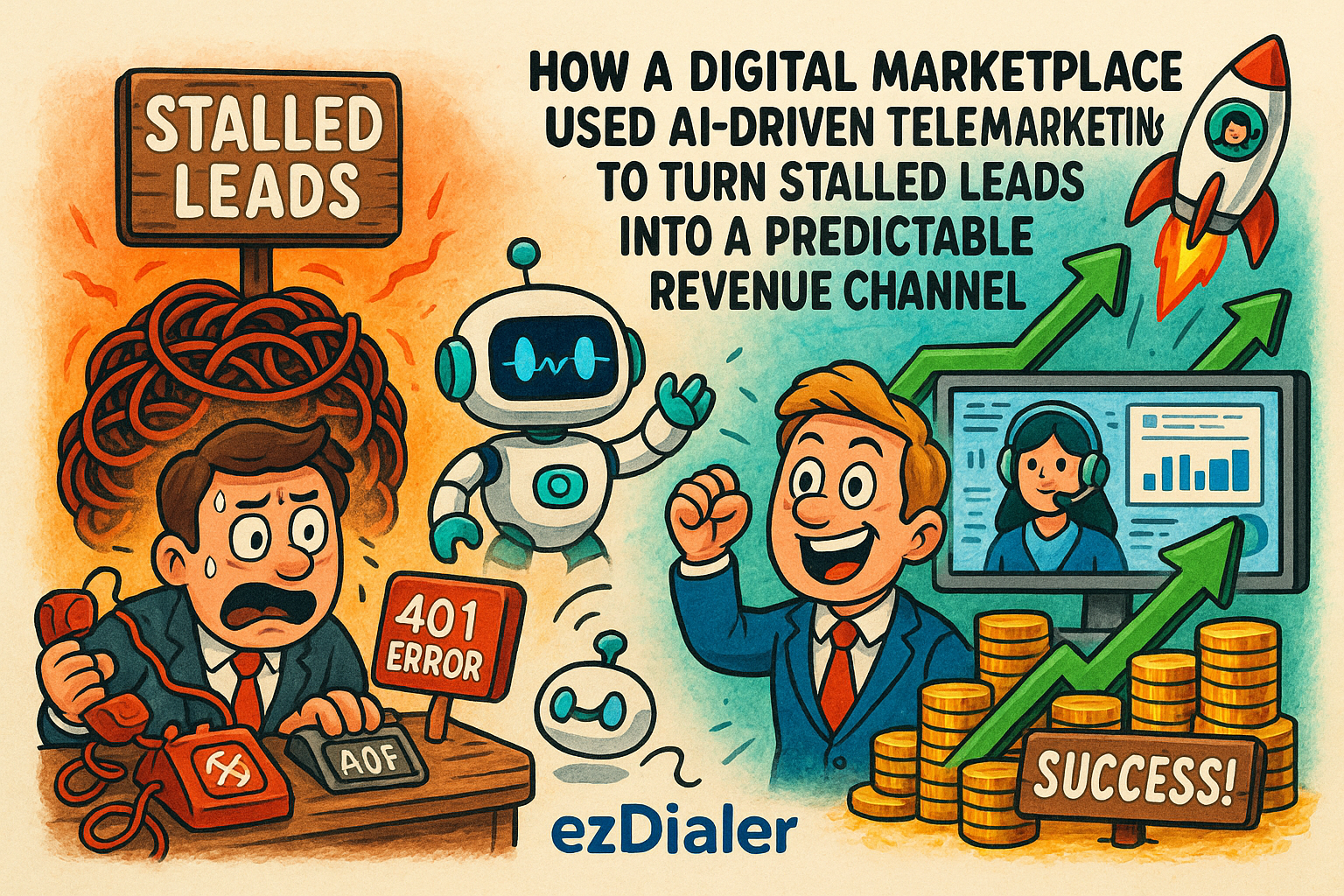
Consider a mid-sized outbound sales operation that adopted ezdial.ai’s ai-driven telemarketing solution to reengage dormant leads. Within weeks, they reported a 70% improvement in connection rates and a significant reduction in manual dialing labor. The AI system identified optimal call times, crafted personalized voice scripts, and rerouted high-potential leads to seasoned agents in real time.
Another customer-support center integrated AI voice bots for after-hours service. Instead of leaving customers stranded after closing time, the bots collected critical details, logged service tickets, and offered FAQ-based guidance. By morning, agents had a queue of prequalified interactions—ready to resolve rather than decipher issues. The efficiency gains were so profound that the center expanded operations across time zones without adding overnight staff.
The Future of AI Voice Automation in Call Centers
The story of call centers in the next decade will be written in digital ink. Voice automation won’t simply support the business—it will define it. As predictive algorithms, sentiment analytics, and speech synthesis continue to advance, we’ll move toward hyper-personalized customer experiences delivered at scale.
For pioneers like ezdial.ai, the mission is clear: create voice automation that feels indistinguishably human but performs superhumanly well. Imagine agents who can see emotional cues in real time, AI systems that anticipate questions before customers voice them, and organizations that measure success not by call volumes but by meaningful outcomes. That’s the frontier we’re stepping into, and curiosity is the ticket to entry.
Conclusion: The Power of Curiosity and Action
Stepping into AI voice automation can feel daunting, especially for call center operators accustomed to traditional processes. But with a mindset fueled by curiosity and guided by platforms like ezdial.ai, the journey becomes not only manageable but exciting. AI will not replace the compassionate understanding of a human voice; it will elevate it. It will handle the mundane, leaving you to focus on what matters most—building lasting connections.
So, if you’re ready to transform your operations, boost efficiency, and explore the full potential of ai-driven telemarketing, take that first curious step. Let ezdial.ai show you what intelligent automation can achieve. Request a quote today and bring your call center into the future of digital conversation.