
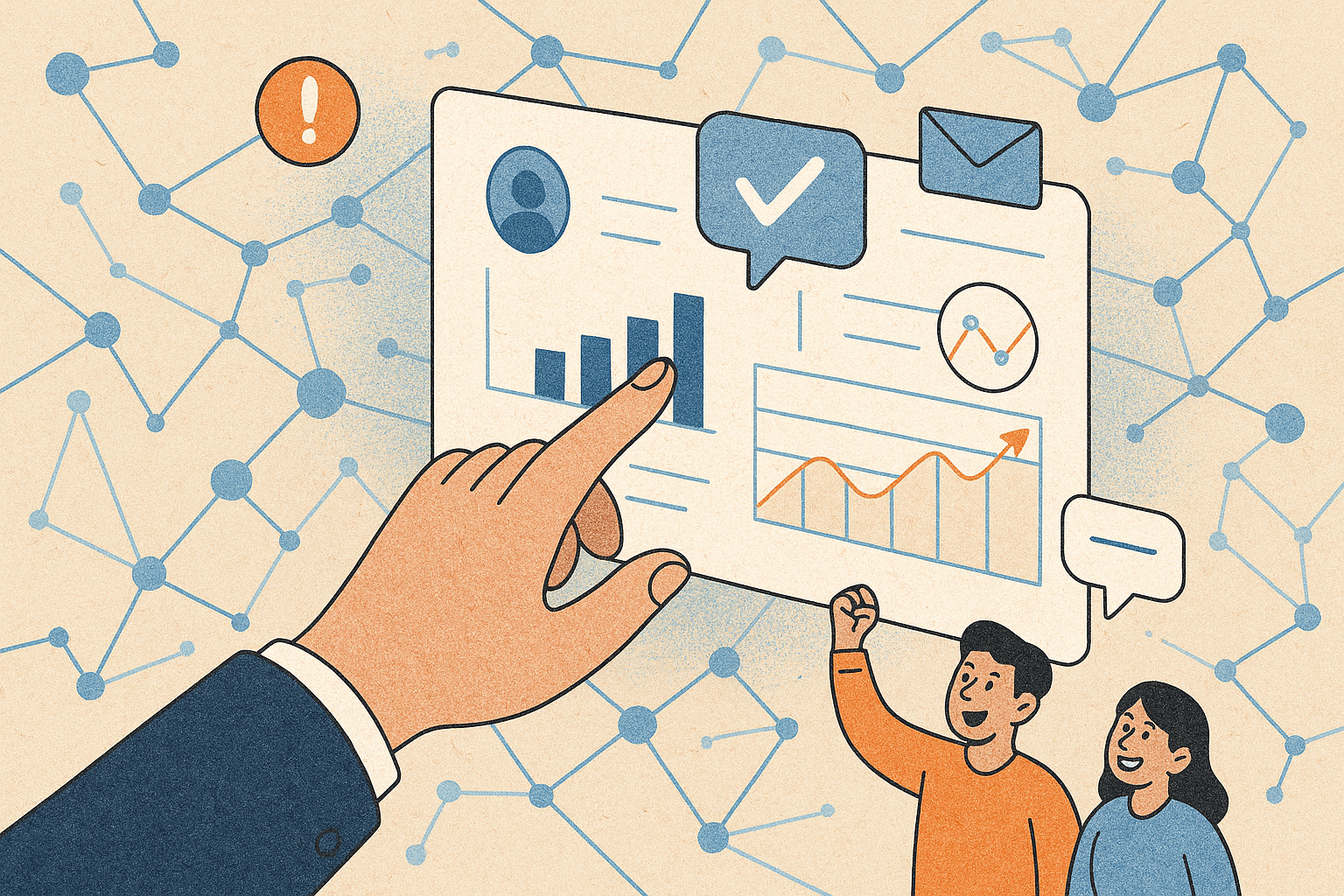
In an increasingly digital-first marketplace, customer success has evolved from a post-sale support function into a proactive, data-informed discipline central to sustainable growth. Customer Success (CS) teams are now tasked not only with reducing churn but also with enhancing the overall customer experience and identifying expansion opportunities. Amid this transformation, AI-powered sales outreach has emerged as a cornerstone of modern customer engagement strategies. As enterprises embrace automation, analytics, and personalization, understanding the comparative benefits of traditional methods versus AI-driven systems becomes imperative for CS leaders seeking efficiency and impact.
The Shift from Reactive to Proactive Customer Success
Historically, Customer Success was primarily reactive—focused on managing customer issues and renewal cycles. This conventional model, while functional in stable markets, faltered as digital transformation accelerated and customer expectations evolved. Today’s customers demand real-time responses, personalized communication, and predictive assistance. In response, CS teams must leverage technology to anticipate needs before they arise.
Data shows this shift is well underway. According to Gartner, 80% of B2B organizations are expected to rely on AI and automation solutions to enhance customer engagement by 2025. The move toward AI-centric customer success transforms team workflows from reactive support centers into proactive growth engines. Platforms like ezdial.ai harness the power of ai-powered sales outreach to streamline engagement and contextualize every customer interaction.
Traditional Outreach vs. AI-Powered Outreach: A Comparative Data Analysis
To appreciate the extent of this evolution, it’s useful to explore how AI reshapes outreach efficiency and effectiveness using measurable benchmarks. Traditional sales and success teams rely heavily on manual segmentation, rule-based triggers, and human intuition to direct engagement. These approaches, while relational, often struggle with scale and accuracy.
On the other hand, AI-driven platforms automate segmentation, use machine learning to predict customer sentiment, and recommend personalized content based on behavior and past interactions. Below is a data-backed comparison illustrating the tangible benefits observed across enterprises transitioning from manual to AI-powered systems:
- Response Rate Improvement: AI-personalized email sequences can achieve up to 35% higher open rates and a 27% increase in response rates compared to static campaigns.
- Time Savings: Automation tools reduce manual outreach tasks by 60–70%, freeing Customer Success Managers to focus on strategic retention initiatives.
- Customer Retention Lift: Companies leveraging predictive analytics see customer retention rates increase by an average of 15–20% year-over-year.
- Revenue Impact: AI-assisted cross-sell and upsell recommendations contribute to an average of 25% higher Customer Lifetime Value (CLV).
These metrics underscore a clear conclusion—AI-driven outreach doesn’t merely optimize communication efficiency; it redefines how organizations understand and nurture customer relationships.
Decoding the Technology Behind AI-Powered Outreach
AI-powered outreach leverages a combination of Natural Language Processing (NLP), predictive analytics, and behavior modeling to understand customer sentiment and intent. Rather than relying on static workflows, systems like ezdial.ai learn from every interaction across platforms—emails, calls, chatbots, and CRMs—creating a 360° view of the customer.
At the core, this technology functions across three technical layers:
- Data Aggregation and Enrichment: AI tools compile structured and unstructured data from multiple touchpoints, centralizing insights that were historically siloed across departments.
- Predictive Engagement Modeling: By analyzing engagement histories, AI forecasts likely churn events or expansion opportunities, enabling CS teams to engage customers preemptively.
- Context-Based Personalization: NLP engines generate personalized outreach messages in real time, increasing relevance and resonance with each communication.
The result is an outreach model where every touchpoint is informed by customer data and optimized for both timing and tone. This precision contrasts markedly with traditional outreach, which often relies on generic templates and manual scheduling.
The Ripple Effects on Customer Success KPIs
One of the most compelling arguments for AI-driven outreach lies in its quantifiable impact on key Customer Success metrics. When implemented effectively, it fundamentally alters performance indicators such as Customer Health Score, Churn Rate, and Net Revenue Retention (NRR).
Recent studies highlight notable trends:
- Customer Health Score Accuracy: AI models improve health score accuracy by over 40% by factoring in behavioral and sentiment data rather than usage alone.
- Lower Churn Rates: Predictive churn identification enables CS teams to take action up to 3 months earlier than traditional methods, reducing churn by 10–15% on average.
- Higher Net Revenue Retention: Enterprises integrating AI-assisted upsell forecasting increase NRR by up to 18% year-over-year.
Platforms like ezdial.ai further amplify these gains by enabling ai-powered sales outreach that synchronizes seamlessly with existing CRM ecosystems. This interconnected workflow ensures that data-driven insights flow continuously between sales, marketing, and CS teams—breaking down silos and fostering collaboration.
Human + AI: The Collaborative Future of Customer Engagement
Despite AI’s analytical advantage, the human element remains invaluable in customer success. AI’s purpose is not to replace team members but to enhance their decision-making capacity and productivity. The most successful enterprises are those that combine machine intelligence with human empathy to craft deeply personalized experiences.
In this model, AI acts as a strategic co-pilot—handling repetitive tasks, analyzing vast data, and making actionable recommendations—while CS professionals focus on cultivating trust and emotional connection. The fusion of human intuition and machine precision represents the pinnacle of modern digital engagement.
Implementation Roadmap: Integrating AI-Powered Outreach into Your CS Strategy
Transitioning from traditional outreach to an AI-driven model requires careful planning and alignment across departments. Here’s a structured approach Customer Success leaders can follow:
- Audit Current Outreach Processes: Map existing communication workflows and identify inefficiencies or redundancies that AI could streamline.
- Establish Measurable KPIs: Define success goals such as engagement rates, retention percentages, or NRR improvements.
- Select an AI Partner: Choose scalable platforms like ezdial.ai that integrate seamlessly with your CRM and communication stack.
- Data Cleansing: Ensure that customer data is up-to-date, accurate, and properly structured to maximize the accuracy of AI modeling.
- Train and Align Teams: Conduct workshops to help Customer Success teams understand how to interpret AI insights and leverage them for higher-impact engagements.
- Iterate and Optimize: Regularly analyze AI-driven performance metrics and refine outreach algorithms based on feedback loops.
This step-by-step integration ensures that AI’s full potential is realized without disrupting the human-driven aspects that define CS relationships.
Industry Comparison: Sectors Leading the AI Outreach Revolution
While AI-driven outreach is making waves across industries, some sectors are pioneering its adoption with dramatic success. For example:
- SaaS and Cloud Platforms: These companies lead adoption, using AI to predict usage drop-offs and automate renewal reminders tailored to each account’s lifecycle stage.
- E-commerce: Personalization algorithms optimize post-purchase engagement by recommending relevant cross-sells based on browsing and order history.
- Financial Services: Predictive outreach enables timely interventions to prevent churn or encourage product upgrades, informed by spending and transaction data.
Across all these verticals, a shared theme emerges: automation doesn’t distance customers. Instead, it creates room for strategic, empathetic human touchpoints by freeing CS teams from administrative overhead.
Real-World Results: Case Study Insights
Consider the case of a global SaaS company that integrated ezdial.ai into its customer success operations. Through intelligent automation and behavioral analytics, the team customized outreach workflows to match each customer’s journey phase. The outcome? A 32% boost in engagement rates and a 17% reduction in churn within six months. Such outcomes illustrate the measurable, data-backed advantages of implementing AI-powered models at scale.
The Ethical Dimension: Responsible AI in Customer Communication
With advanced personalization comes ethical responsibility. Transparency, data privacy, and algorithmic fairness are non-negotiable elements in customer success communications. Organizations must ensure that AI systems are trained on unbiased data sets and comply with global privacy standards such as GDPR and CCPA.
Responsible AI application not only protects brand reputation but also reinforces customer trust—a key component of long-term success in the digital ecosystem.
Conclusion
The integration of ai-powered sales outreach into customer success strategies marks a pivotal evolution in the digital industry. It equips teams with predictive intelligence, streamlines engagement, and strengthens customer relationships through data-led personalization. As industries continue to shift toward full digitalization, combining human insight with AI precision will define the new era of customer success leadership.
Forward-thinking organizations that embrace this transformation today will not only enhance retention and growth metrics—they will set the benchmark for customer excellence tomorrow. Ready to elevate your outreach strategy with proven AI solutions? Try it risk-free and experience how ezdial.ai can unlock measurable customer success outcomes for your business.