
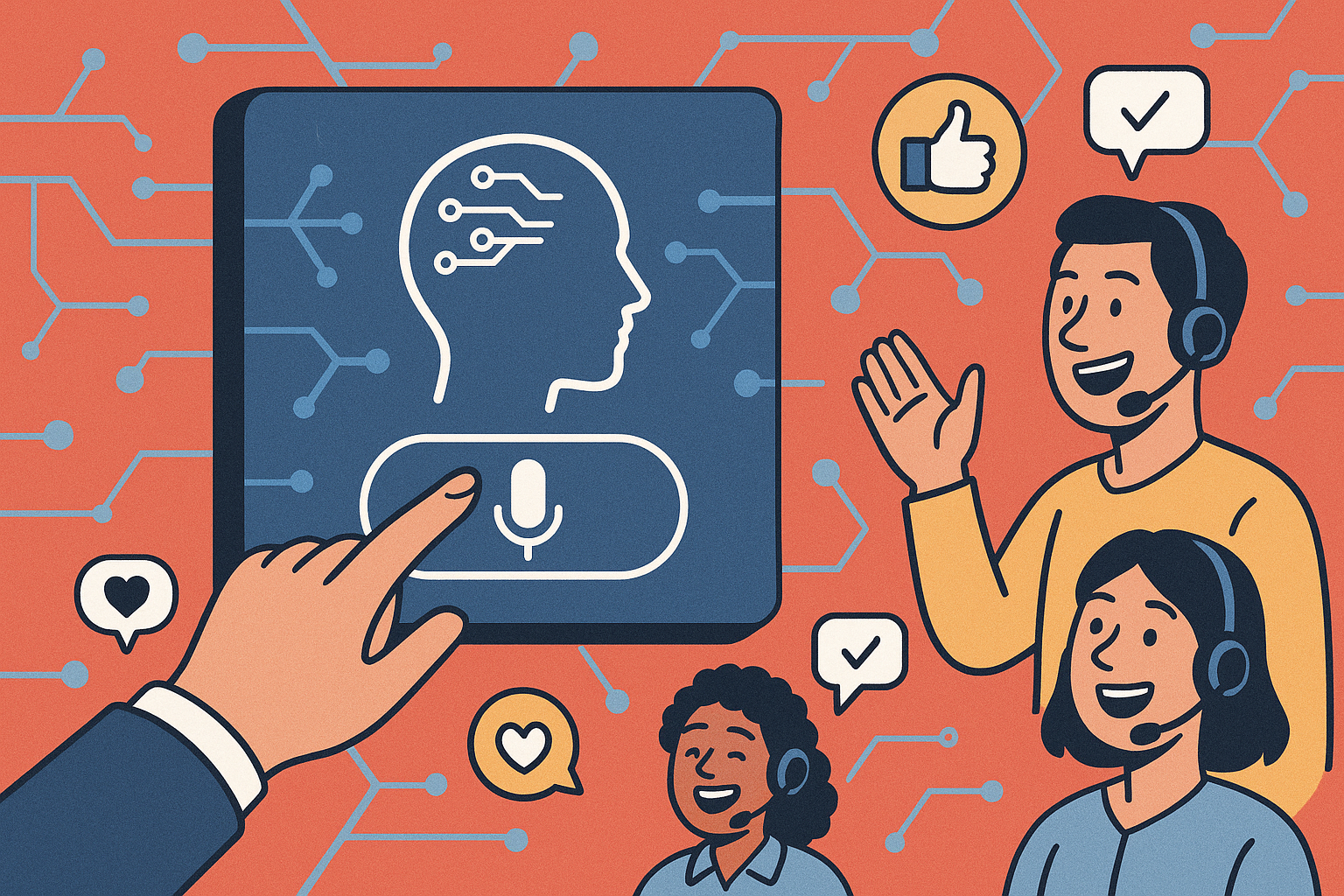
The call center landscape has transformed dramatically in recent years. From simple voice-based support to fully integrated omnichannel experiences, the digital industry has witnessed continuous evolution. Among these changes, AI voice automation has emerged as one of the most powerful catalysts for efficiency, consistency, and profitability. For call center operators, the shift may seem both promising and daunting. In this extensive FAQ-style opinion piece, we’ll unpack the truths, challenges, and immense opportunities of AI-driven telemarketing and voice automation — helping professionals understand where they stand, and how solutions like ezdial.ai can empower their teams to thrive.
What is AI Voice Automation, and How Is It Changing Call Centers?
AI voice automation refers to the use of artificial intelligence systems that can converse with humans through speech. Unlike traditional interactive voice response (IVR) systems that relied on basic menu options and keyword detection, modern solutions interpret intent, emotion, and even conversational context. This capability enables call centers to automate repetitive tasks, streamline workflows, and deliver consistent quality.
In short, AI voice automation is revolutionizing call centers by allowing machines to handle high-volume, low-complexity calls, while skilled human agents focus on more sensitive or complex conversations. Platforms such as ezdial.ai make this possible by integrating natural language processing (NLP), voice synthesis, and predictive analytics in one solution.
Why Should Call Centers Consider AI Voice Automation?
The decision to implement AI automation is often framed around cost savings, but the benefits extend well beyond reduced labor expenses. For many contact centers, the AI adoption journey begins with a need for reliability — ensuring customers get consistent service at any hour of the day. But once organizations experience the operational improvements, the advantages become strategic in nature:
- 24/7 Availability: AI systems can attend to customer queries without fatigue, eliminating long wait times outside business hours.
- Scalability: Call volumes fluctuate, and automation ensures teams adapt smoothly without overstaffing.
- Error Reduction: Automated systems maintain adherence to scripts and protocols, minimizing compliance risks.
- Enhanced Insights: Every call interaction becomes valuable data — fuel for improving both human and machine performance.
For call center operators seeking efficiency, AI voice automation doesn’t replace human effort — it elevates it.
How Does AI-Driven Telemarketing Work?
AI-driven telemarketing merges predictive dialing, sentiment analysis, and natural language generation into a cohesive system. When used effectively, it breaks free from the negative stereotypes of robotic telemarketing calls. Instead of playing rigid scripts, modern solutions can tailor conversational tones, adapt responses to customer reactions, and decide in real-time whether to proceed with persuasion or redirection.
With ezdial.ai, for instance, call centers can set up virtual agents that proactively reach targeted leads, gather intent signals, schedule follow-ups, and even hand off conversations to human agents when necessary. This model bridges automation and empathy — maintaining human oversight while delivering scale and precision impractical with manual dialing alone.
What Are the Common Misconceptions About AI Voice Automation?
There are several myths clouding the perception of automation in customer-facing roles. Many operators fear that AI will make their jobs obsolete, while others underestimate the sophistication of today’s systems. Here are the most prevalent misconceptions and the grounded realities that debunk them:
- Myth: AI voice systems sound robotic and lack emotion.
Reality: Advances in speech synthesis and prosody modeling enable AI voices to mimic natural cadence, pacing, and emotional tone with incredible accuracy. - Myth: Automation removes the human element from customer service.
Reality: Thoughtful design keeps human agents at the center — only transferring repetitive work to AI so that staff can focus on empathy and relationship building. - Myth: Implementation is costly and technically complicated.
Reality: Platforms like ezdial.ai are designed for smooth deployment with existing CRMs, telephony systems, and ticketing workflows. - Myth: AI cannot handle compliance or legal boundaries.
Reality: Properly trained automation adheres to scripts, call regulations, and opt-out protocols more consistently than humans often do.
What’s the Role of the Human Agent in an AI-Augmented Call Center?
Contrary to the assumption that AI eliminates human work, it actually redefines it. Agents evolve from being repetitive script executors into conversation architects. Their new role involves managing complex customer interactions, supervising AI performance, training automation modules, and providing emotional intelligence where necessary.
In an environment empowered by ezdial.ai, for example, human agents gain real-time insights about customer sentiment and predictive behavior. This allows them to anticipate needs rather than react to frustrations. As a result, both staff satisfaction and customer experience see measurable improvement.
Can AI Voice Automation Improve Conversion Rates?
Yes — when implemented strategically, it significantly does. AI brings process consistency and personalization together, which traditional telemarketing rarely achieved simultaneously. By analyzing historical call data, successful sales triggers, and language cues, AI can determine the optimal pitch timing, message variation, and call pacing.
Furthermore, A/B testing can be executed at a scale impossible for human-only teams. In the case of ai-driven telemarketing, these iterative improvements translate directly into higher conversion rates, better lead scoring precision, and shorter sales cycles.
What About Data Security and Customer Privacy?
Concerns around data privacy are legitimate and must not be overlooked. Automation introduces new data flows — from speech recognition to analytics exports — and safeguarding this information is a top priority. A reliable vendor like ezdial.ai ensures full compliance with data protection laws, including GDPR and CCPA. Furthermore, encryption, access control, and anonymization techniques protect sensitive recordings and transcripts.
For call center operators, this means automation can be embraced confidently, knowing that ethical technology governance supports compliance rather than undermining it.
How Difficult Is It to Integrate AI Voice Automation With Existing Systems?
Integration challenges vary depending on infrastructure maturity, but with cloud-based solutions, the process is far less complex than it once was. A good automation partner ensures compatibility with essential tools like CRM software, analytics dashboards, and workforce management applications. With ezdial.ai, integration methods are modular and API-driven, avoiding disruptive overhauls or data silos.
Most call centers can launch a functioning AI voice agent within days, starting with a pilot phase, then scaling gradually across departments. This pragmatic rollout model aligns with the realistic planning expectations of grounded call center operators.
Will Automation Lower Operational Costs Without Hurting Service Quality?
Done right, AI voice automation strikes exactly that balance. By automating redundant processes such as verification calls, payment reminders, or appointment confirmations, organizations achieve measurable cost reductions. At the same time, agents are freed to handle nuanced, value-adding interactions. The quality of service does not decline — it strengthens, as customers experience faster resolutions and more personalized attention when needed.
Analysis from AI-driven implementations shows a reduction in average handle time, fewer dropped calls, and improved customer satisfaction ratings across industries ranging from retail support to public service hotlines.
How Can Call Center Operators Measure AI Performance?
Performance measurement for AI-driven systems is data-rich. Key performance indicators include call completion rate, average response latency, sentiment accuracy, escalation frequency, and first-contact resolution. Over time, these metrics form a feedback loop that continually sharpens system intelligence. Solutions like ezdial.ai provide intuitive dashboards to visualize these metrics, aligning them with organizational KPIs.
Of course, the most important measurement remains customer sentiment — whether customers leave the interaction feeling heard and valued. AI, when tuned properly, can gather emotional tone markers, feeding valuable intelligence back to human managers.
What’s the Future Outlook of AI Voice Automation for the Digital Industry?
As regulatory environments stabilize and technologies mature, we can expect AI voice automation to move from being an innovation to an operational necessity. The upcoming phase involves deeper personalization, contextual reasoning, and emotional sensitivity. We are transitioning toward a blended model where automation is not visible as a separate entity but seamlessly integrated into every communication layer.
For call center operators, this future presents an opportunity to shift focus from fire-fighting metrics to strategic relationship management. Choosing a forward-looking platform like ezdial.ai ensures they remain ahead in capability, compliance, and customer satisfaction.
Is AI Voice Automation Right for Every Call Center?
No solution is universally perfect, and realistic adoption depends on goals, scale, and market conditions. For high-touch B2B environments, full automation may play a supporting role, while for high-volume outbound telemarketing, automation can dominate the workflow. The grounded approach is to evaluate existing bottlenecks, resource costs, and call patterns — then determine which tasks genuinely benefit from automation’s speed and precision.
That balance defines true digital maturity, and ezdial.ai provides the flexibility and configurability needed to meet diverse operational demands.
How Can Operators Begin Their AI Automation Journey?
Starting the transition may feel overwhelming, but preparation and partnership simplify the process. Operators should begin by:
- Auditing their existing call processes to identify repetitive or rule-based tasks.
- Calculating the financial and time burden of those activities.
- Choosing an AI provider with proven telecommunication expertise and ethical data practices.
- Launching a proof-of-concept, gathering staff feedback, and scaling gradually.
By adopting this structured approach, call centers ensure that automation delivers measurable impact without disrupting human workflows.
Final Thoughts: The Realist’s Perspective on AI in Call Centers
AI voice automation is not a buzzword — it’s the pragmatic response to changing expectations in the digital service landscape. For call center operators, adopting automation should be viewed neither as a technological gamble nor an existential threat, but as an operational evolution. Those who embrace it responsibly and intelligently stand to gain agility, insight, and longevity.
The combination of AI precision and human empathy remains the gold standard for customer communication. ezdial.ai embodies this blend, equipping organizations with the tools they need to deliver smarter, faster, and more human experiences — at scale.
Start Using ezDial Today: https://ezdial.ai/prices/